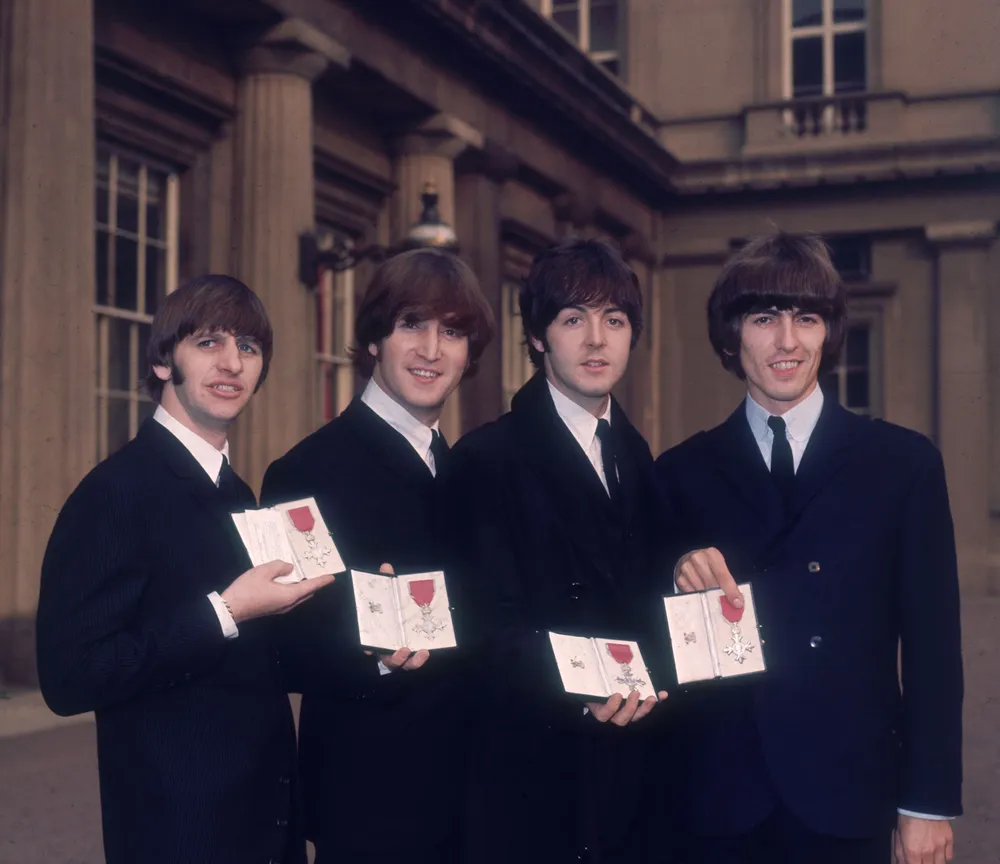
The Fab Four. John, Paul, George, and Ringo. The Beatles were four young musicians from the working-class seaport city of Liverpool, England, who accomplished nothing less than changing the course of rock and roll and transforming youth culture. From 1962, the year that Ringo Starr joined up with John Lennon, Paul McCartney, and George Harrison, until 1970, the year the quartet split up, the Beatles served as the global polestar for the hopes and dreams of the generation that came of age in the 1960s.
From Liverpool to Global Dominance
Emerging from the gritty, post-war energy of Liverpool and honed by grueling, all-night sets in the clubs of Hamburg, Germany, the band synthesized American rockabilly, rhythm and blues, and British music hall traditions into something entirely fresh. When they touched down in New York in February 1964, their historic appearance on The Ed Sullivan Show drew over 73 million viewers, officially igniting “Beatlemania.” This wasn’t just a brief flash of teenage fandom; it was a seismic shift that opened the floodgates for the British Invasion and permanently relocated the center of the musical universe.
Redefining the Studio and the Society
As the decade progressed, the Beatles outgrew the boundaries of traditional pop music. They retired from touring in 1966 to treat the recording studio as an instrument itself. Collaborating with producer George Martin, they pioneered avant-garde production techniques—using backward tape loops, multi-track overdubbing, and exotic instrumentation like the Indian sitar. Albums like Revolver and Sgt. Pepper’s Lonely Hearts Club Band did more than just push the boundaries of sound; they provided the sonic backdrop for the counterculture movement, capturing the political unrest, spiritual searching, and psychedelic experimentation of the era.
An Enduring Legacy
By the time they stood on the rooftop of Apple Corps for their final public performance in 1969, the Beatles had matured from mop-topped teen idols into sophisticated cultural icons. Their eventual breakup in 1970 marked the symbolic end of the 1960s idealism. However, their impact remained indelible. They didn’t just write the soundtrack to a decade; they established the blueprint for the modern singer-songwriter, elevated pop music into a respected art form, and permanently altered the DNA of global youth culture.
Read more at https://www.britannica.com/topic/the-Beatles